








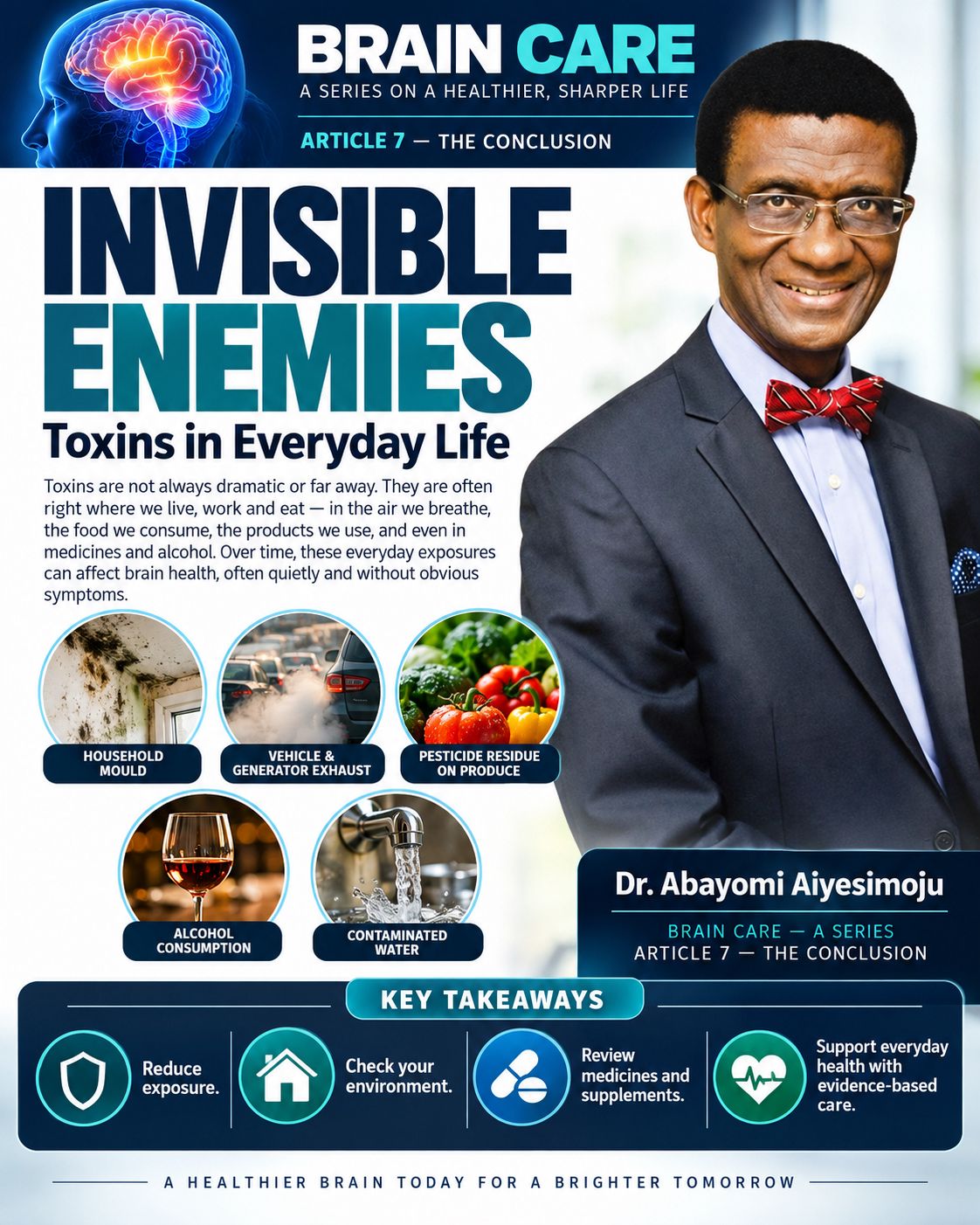
What if some of the threats to our brain health were not dramatic events or obvious medical emergencies, but substances we encounter in our homes, workplaces and daily routines?
Throughout this Brain Care series, Dr. Abayomi Aiyesimoju has explored the factors that influence how our brains function, how we feel and how effectively we live. In this seventh and final instalment, he examines an often-overlooked subject: everyday exposure to potentially harmful substances.
From household mould and air pollution to alcohol, pesticide residues and unsafe drinking water, our environment can influence our health in ways that are not always immediately apparent.
In this concluding article, Dr. Aiyesimoju examines the potential effects of these exposures, the importance of reducing preventable risks, and the practical steps individuals and communities can take to protect their health.
THE HIDDEN THREAT: WHEN DANGER BECOMES ORDINARY
Most people associate toxic exposure with dramatic industrial incidents, such as chemical spills, contaminated factories or hazardous substances in workplaces.
The reality, however, is often much closer to home.
Alcohol, air pollution, mould in damp buildings, pesticide residues on food, indoor insecticides, and exhaust fumes from vehicles and generators are examples of exposures that may affect our health. Some medicines and supplements can also cause harm when used inappropriately or for prolonged periods.
Daniel Amen’s BRIGHT MINDS framework, which identifies factors associated with brain health, includes T for toxins. It serves as a useful reminder that environmental and chemical exposures deserve attention when considering how to protect the brain.
The challenge is that some harmful exposures produce no immediate or obvious symptoms. Others cause symptoms that may be mistaken for ordinary fatigue, ageing, stress or unrelated illnesses.
Understanding the risks is therefore an important first step towards prevention.
- THE BIOLOGY: WHY THE BRAIN DESERVES SPECIAL PROTECTION
The brain is a complex organ with substantial energy requirements and an extensive blood supply. Although the blood-brain barrier helps protect it from many harmful substances, this protection is not absolute. Certain chemicals can cross the barrier or affect the brain indirectly through other biological processes.
The effects depend on several factors, including the substance involved, the amount and duration of exposure, the route through which it enters the body, and an individual’s age and health.
Some exposures can cause acute neurological effects, while others are associated with longer-term health risks. Air pollution, for example, has been linked to adverse neurological and cognitive outcomes. Excessive alcohol consumption can damage the brain, while certain chemicals can cause serious harm at sufficiently high levels of exposure.
However, it is important not to assume that every everyday exposure is dangerous or that all harmful substances accumulate in the brain. The level of risk varies considerably from one substance to another.
The practical lesson is straightforward: identify meaningful risks, reduce unnecessary exposure and investigate persistent symptoms rather than dismissing them.
- DETOXIFICATION: SUPPORTING THE BODY’S NATURAL SYSTEMS
The human body has sophisticated mechanisms for processing and eliminating waste products and potentially harmful substances. The liver transforms many chemicals, the kidneys remove waste through urine, and the digestive system helps eliminate substances through bowel movements.
These systems work continuously and do not ordinarily require commercial detoxification programmes or special cleansing procedures to function properly.
Adequate hydration, a balanced diet, sufficient dietary fibre and appropriate physical activity support general health. Avoiding excessive alcohol consumption, taking medicines as directed and addressing the sources of harmful exposure are also important.
It is equally important to distinguish between supporting normal bodily functions and making unsubstantiated claims about removing unspecified toxins.
Colonic irrigation and homeopathic drainage remedies have not been established as effective methods of removing toxins or improving brain health. Colonic irrigation can also carry risks, including dehydration, infection and bowel injury. Such practices should not be presented as necessary detoxification treatments.
Where poisoning or a specific toxic exposure is suspected, the appropriate response is medical assessment and, where indicated, targeted testing and treatment.
The objective is not to pursue a dramatic cleansing process. It is to protect the body’s normal functioning and address identifiable risks through evidence-based care.
- THE PSYCHOLOGICAL DIMENSION: THE ANXIETY OF INVISIBLE RISK
Toxic exposure carries a particular psychological burden because it is not always visible.
Someone who suspects mould in their home, worries about years of heavy alcohol consumption or fears exposure to polluted air may experience persistent anxiety about possible harm.
These concerns should not automatically be dismissed. At the same time, uncertainty can become distressing when people are left to speculate without reliable information.
Chronic anxiety and stress can themselves affect sleep, concentration and general well-being. This makes it important to approach environmental health concerns calmly and systematically.
Practical investigation is usually more helpful than either denial or uncontrolled worry.
If a building has persistent dampness, investigate the source of the moisture and address the problem. If alcohol consumption has become excessive, seek appropriate support. If symptoms develop after exposure to a chemical, discuss the circumstances with a qualified healthcare professional.
A review of medicines and supplements can also help identify unnecessary use, inappropriate combinations or potential adverse effects.
Knowledge replaces guesswork with informed action.
- THE SOCIAL DIMENSION: SHARED ENVIRONMENTS, SHARED RISKS
Toxic exposure is rarely an exclusively individual problem.
Mould in a family home may affect several occupants. Poor ventilation and chemical hazards can expose workers to avoidable risks. Vehicle emissions and generator fumes can affect entire neighbourhoods.
Environmental hazards are also not distributed equally. Communities with inadequate waste management, unsafe water supplies or heavy exposure to pollution may face risks that cannot be resolved through individual lifestyle choices alone.
Protecting brain health therefore requires more than personal discipline.
Households must address dampness, ventilation and the unsafe storage of chemicals. Employers must take occupational safety seriously. Communities need reliable waste management and cleaner environments, while public authorities must enforce appropriate environmental and public health standards.
When the source of exposure is shared, the response must also be collective.
- THE SPIRITUAL DIMENSION: REVERENCE FOR THE BODY
Many spiritual and wisdom traditions encourage people to regard the body as something worthy of care rather than neglect.
For Christians, this perspective resonates with 1 Corinthians 6:19–20, which describes the body as a temple of the Holy Spirit.
This understanding can give deeper meaning to everyday health decisions.
Moderating alcohol consumption, avoiding unnecessary exposure to harmful substances, using medicines responsibly and maintaining a safe living environment can all be expressions of responsible stewardship.
Caring for the body is not about becoming fearful of every possible hazard. Nor does it mean assuming that illness is necessarily the result of personal failure.
Rather, it is about making thoughtful choices, seeking help when necessary and respecting the physical life entrusted to us.
Faith and responsible healthcare need not compete. They can work together to encourage informed, compassionate and consistent care.
WHAT YOU CAN DO THIS WEEK
Protecting brain health does not require you to change everything overnight. Start with practical steps that reduce identifiable risks.
- Reassess your alcohol consumption.
Alcohol can affect memory, judgement, coordination and other aspects of brain function. Heavy and prolonged consumption carries significant health risks. If you drink, consider the risks honestly and seek professional support if cutting down proves difficult. Avoiding alcohol eliminates alcohol-related exposure.
- Investigate dampness and mould in your home.
Look for persistent leaks, water damage, visible mould and areas with poor ventilation. Address the underlying moisture problem rather than merely covering the affected surface. Seek professional assistance where necessary, particularly if the affected area is extensive.
- Pay attention to food, water and air quality.
Wash fresh produce under clean running water. Use a safe drinking-water source and follow appropriate treatment guidance where contamination is suspected. Ensure that generators and fuel-burning equipment are operated outdoors, well away from windows, doors and occupied spaces. Never run a generator indoors or in an enclosed area because of the risk of fatal carbon monoxide poisoning.
- Review medicines and supplements.
Do not assume that a product is safe simply because it is sold without a prescription or because it is marketed as natural.