







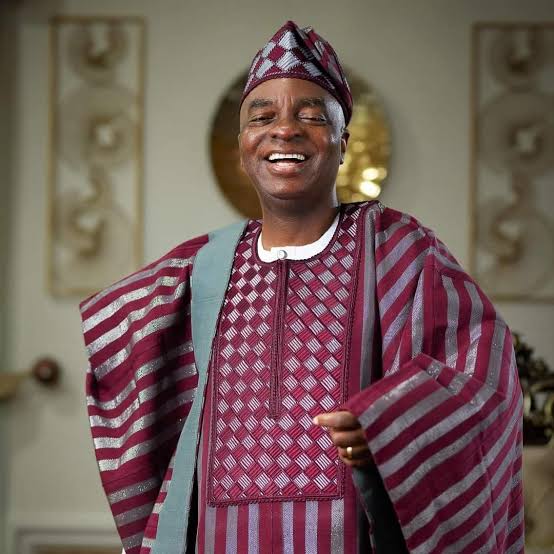
My own story with Bishop David Oyedepo goes back to 2001.
It was one of those dramatic encounters one does not easily forget. I will tell the full story in one of my field reports because there is much more to it than I can conveniently put into this piece.
Since that first encounter, I have had five separate one-on-one encounters with the Bishop. Each has been memorable in its own way, and each has left me with what I have come to describe as a master class from the Bishop.
I have counted 14 such lessons so far.
But one particular encounter speaks directly to this story about men and the night.
THE 1:30 A.M. ENCOUNTER
Some years after our first meeting, I booked a weekend at the Covenant University Guest House in Ota for a personal retreat.
I had also arranged accommodation for the editor of the newspaper I co-founded, Monewise, at the Camp House, another guest facility belonging to the mission.
One of my rituals whenever I am in the expansive Covenant University environment is to walk. I enjoy walking around the grounds, thinking, praying and observing.
That particular night, I was on a prayer walk from Covenant University towards the Camp House, where I was supposed to meet my colleague, Bamidele Famoofo—a great guy.
It was around 1:30 a.m.
As I approached the area around the Bishop’s office, something happened that I was not expecting.
A Range Rover pulled up beside me.
The occupant looked out and called:
“Ayo!”
I stopped.
It was Bishop Oyedepo.
What surprised me was not simply seeing him at that hour. It was the fact that he remembered my name.
Our first encounter had been in 2001, and I had never imagined that I would have remained sufficiently memorable for him to recognise me years later, particularly in the middle of the night.
He asked, “Ayo, what are you doing here?”
I explained that I was staying at the Covenant University Guest House and was on my way to meet my colleague at the Camp House.
Then came the part that completely disarmed me.
“Why not join me in the office?” he asked.
I was not sure I had heard correctly.
He repeated, “Come along.”
He drove ahead, and I followed.
The security men had obviously heard the exchange and knew I had been invited. They allowed me through and ushered me into his office.
I was, quite frankly, speechless.
Here was the Bishop, in his office at about 1:30 a.m., and I had just been invited in from a prayer walk.
After some conversation, he turned to me and asked, “Don’t you have questions for me?”
That was my opening.
I summoned some courage and went straight to what had been on my mind. I told him that I had noticed something about him over the years: he seemed to be working when most people were asleep.
I asked whether there was a principle behind it.
His response, as I remember it, was almost matter-of-fact.
“You observed well.”
He then explained that this was a habit he had maintained for many years. At the time, he said, it had already been part of his routine for about 23 years.
He jokingly described it as “spending two days in one day”.
Naturally, I wanted to know how that was possible.
He explained that he would resume work at his office around 7 a.m. and work through the day. Around 7 or 8 p.m., he would return home, take a nap and, by about 9 p.m., be back at his desk.
Then the second shift would begin.
He could continue working until about 4 a.m., while some of his associates might leave around 3 a.m.
It was not merely personal work. I later discovered that many of his meetings with senior pastors were conducted at night.
That encounter gave me an entirely different understanding of the phrase working day.
For some people, a day ends at sunset. For some extraordinary people, sunset appears to signal the beginning of another shift.
“WHEN YOU SEE A CEO CARRYING FILES IN THE MORNING…”
The Bishop made another observation that stayed with me.
He said, casually, that when you see a CEO carrying files around in the morning, he has already lost that day.
I understood what he meant.
The morning, in his view, should not be the time when a chief executive is just beginning to figure out what needs to be done. The work of thinking, preparing, reviewing and planning should have begun much earlier.
The night, therefore, becomes a strategic advantage.
While the world is quiet, the leader has time to think. There are fewer interruptions, fewer distractions and fewer demands. Perhaps most importantly, there is room for concentration.
WHY STAY AWAKE WHEN OTHERS SLEEP?
There is another explanation I have heard attributed to the Bishop.
I did not hear this particular statement directly from him, so I will not put it in his mouth.
Someone who had asked him why he was so active at night recounted the answer to me.
The explanation was built around the biblical picture of the enemy coming to sow weeds while men sleep.
The thought, as it was relayed to me, was simple and striking:
If the enemy is busy sowing while men sleep, why should I surrender all those hours to sleep?
Whether one takes that statement literally or metaphorically, it captures something about the Bishop’s philosophy of work and vigilance.
He seems to have developed an unusual capacity to use the quiet hours.
And the results are difficult to ignore.
WHAT CAN BE BUILT IN THE QUIET HOURS?
When I think about that 1:30 a.m. encounter today, I sometimes ask myself a simple question:
What can a person build if he consistently finds extra productive hours every day for decades?
Consider what has emerged from Bishop Oyedepo’s ministry and leadership ecosystem: Faith Tabernacle, Covenant University, Landmark University, Faith Academy and now The Ark.
These are not small projects. They are institutions requiring vision, organisation, people, money, systems, relentless execution and, above all, extraordinary amounts of time.
Of course, I am not suggesting that staying awake at night is the secret formula for building institutions. It isn’t. Many people stay awake all night and build nothing.
The real lesson is different:
What do you do with the hours you have?
The Bishop’s night watch is not simply about sleep deprivation. It appears to be about intentionality.
The hours are being converted into something: thinking, planning, prayer, meetings, review, execution, leadership and, perhaps most importantly, preparation for the next day.
I TOO BECAME A NIGHT PERSON
There is a confession I should make here.
Since that encounter, I, too, have become something of a night person.
Perhaps I should blame the Bishop.
My doctor friends would probably object to this habit. They have repeatedly reminded me that the human body needs adequate sleep.
They are probably right.
But there is something about the quietness of the night that I find difficult to resist.
At midnight, the world changes. The telephone becomes quieter. The demands become fewer. The mind has room to wander.
You can pray without interruption. You can read, write and think through an idea without somebody asking you for something every five minutes.
Sometimes, in those quiet hours, an idea that looked ordinary during the day suddenly becomes clear.
That is why the Bishop’s story has remained with me—not because I think everybody should copy his sleeping pattern, but because he taught me something about the value of protected time.