








Ray Kroc, the businessman who transformed McDonald’s into a global franchise, reportedly asked business students what industry McDonald’s operated in. They answered hamburgers. His answer was real estate.
The underlying lesson is that the property supporting a business can sometimes be more valuable over time than the business activity taking place on it.
That distinction provides the foundation for this series. Rather than viewing property solely as land to buy and sell or buildings to rent out, we will examine opportunities to build businesses around strategically located real estate.
The objective is to identify property-based investments capable of generating recurring income while preserving and potentially increasing the value of the underlying asset.
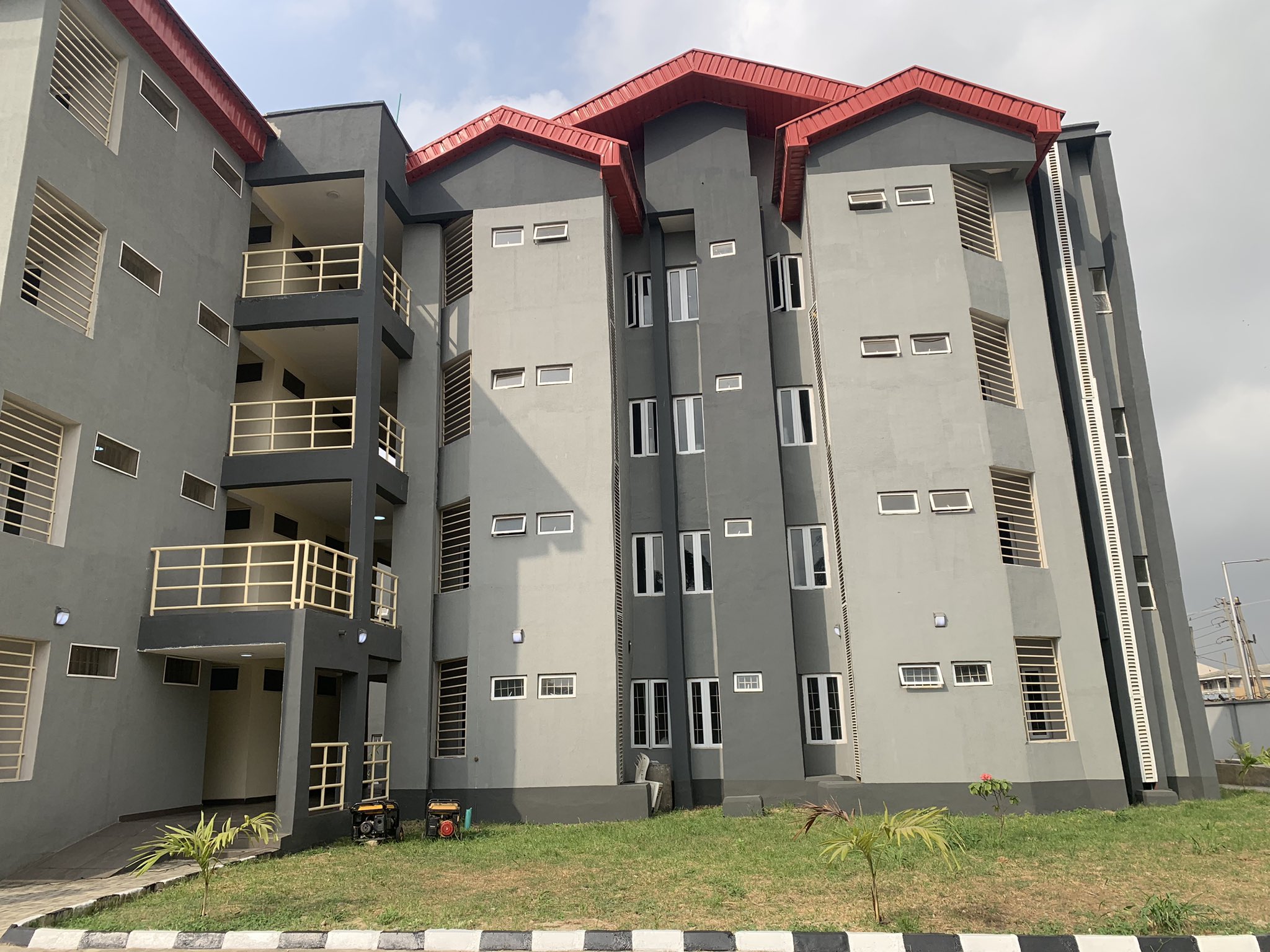
Our first opportunity is the student hostel: a property positioned close enough to a Nigerian tertiary institution to convert demand for student accommodation into a sustainable rental business.
THE INVESTMENT MOVE: BUY LAND NEAR CAMPUS AND BUILD A PURPOSE-DESIGNED HOSTEL
The strategy begins with acquiring a plot within convenient walking distance of a federal, state or accredited private tertiary institution.
Location is critical. The property must be close enough to campus to offer students a genuine advantage in convenience, accessibility and potentially transport costs.
Before purchasing, investors should confirm that the land’s zoning classification permits the proposed development under applicable state planning laws. They should also conduct a thorough title search, establish that the seller has a valid interest in the property and complete the necessary documentation, including any applicable Governor’s Consent, stamp duties and registration at the relevant state land registry.
The next step is to engage a registered surveyor and an architect experienced in student accommodation.
Rather than constructing an ordinary residential building and subsequently converting it into a hostel, investors should consider a purpose-designed facility. Depending on the available land, budget and market demand, a development might accommodate between 20 and 60 single-occupancy rooms.
Each room should provide the essentials for student life, including a study desk, storage space and adequate ventilation. En-suite facilities can be incorporated where the budget permits and the market supports the additional cost.
Shared amenities should also be planned carefully. These may include a communal kitchen, reliable electricity supported by a generator or inverter system, secure access, adequate water supply, sanitation facilities and parking where the site permits.
The objective is to create a functional, secure and well-managed environment that students want to occupy and parents are comfortable paying for.
TURNING ACCOMMODATION INTO A BUSINESS
A student hostel should operate as a properly structured business rather than an informal rental arrangement.
Annual leases can provide a predictable income framework, although the payment structure should reflect local market practices, applicable tenancy laws and students’ ability to pay. Rent should be collected according to clearly documented tenancy terms.
Where service charges are collected, the agreement should specify what they cover, such as electricity generation, security, cleaning and shared utilities. These charges should be accounted for separately from rental income.
Security deposits should also be handled in accordance with the tenancy agreement and applicable law.
Professional management is equally important. A resident manager should oversee daily operations, coordinate maintenance, enforce reasonable hostel rules and address complaints promptly.
Before the building opens, the investor should establish rent collection procedures, maintenance schedules, security arrangements, emergency protocols and systems for tracking occupancy and operating expenses.
Once construction is completed and the necessary approvals have been obtained, the hostel can begin operating as an income-producing business, provided there is sufficient demand and an effective tenant acquisition strategy.
The goal is to build an asset with an identifiable customer base, recurring demand and a management structure capable of protecting its value over time.
WHERE THE OPPORTUNITY HAS EMERGED
Purpose-built student accommodation has attracted investment in areas surrounding several Nigerian universities and tertiary institutions.
Examples include Akoka, around the University of Lagos; Choba, near the University of Port Harcourt; Ile-Ife, around Obafemi Awolowo University; Ota, near Covenant University, Bells University of Technology and Crawford University; and areas around the Bodija axis serving the University of Ibadan.
Private universities in and around Lagos have also contributed to demand for student accommodation at premium rental levels in suitable locations.
However, proximity to a university does not automatically guarantee profitability. Actual performance depends on enrolment, the supply of competing accommodation, students’ ability to pay, construction costs, occupancy levels and the quality of management.
Investors must therefore assess each market individually rather than assume that every university town offers the same opportunities.
AN ILLUSTRATIVE INVESTMENT CASE
Consider a hypothetical investor who acquired a 600-square-metre plot within walking distance of Obafemi Awolowo University in Ile-Ife in 2018 for ₦25 million.
The investor subsequently spent another ₦45 million constructing a purpose-designed, 30-bed hostel, bringing the initial land and construction investment to ₦70 million.
From the second academic session, the hostel generated approximately ₦12 million in annual gross rental income. Occupancy remained above 90 per cent for four consecutive academic sessions.
On these assumptions, the hostel would generate gross rental income equivalent to approximately 17.1 per cent of the initial ₦70 million investment annually.
At that level of gross income, recovering the initial capital would theoretically take about 5.8 years if all rental income were available for that purpose. In practice, the payback period would be longer because the owner must meet operating expenses, maintenance costs, taxes, insurance and other obligations.
The figures are illustrative rather than a verified investment outcome or a guarantee of returns. They exclude possible financing costs, major repairs, periods of vacancy and changes in rental rates. They also assume that the stated annual rental income is sustained, an outcome that would depend on market conditions and effective management.
Nevertheless, the example demonstrates the investment logic: a carefully selected property, supported by a viable accommodation business, can potentially generate recurring income while preserving ownership of the underlying asset.
THE DISCIPLINE THAT MAKES IT WORK
Three practices distinguish a student hostel that builds value over time from one that gradually deteriorates.
FIRST: FOLLOW THE WALKING-DISTANCE RULE
Measure proximity in minutes on foot, not merely by the property’s address.
A hostel located approximately three to eight minutes’ walk from a campus gate may enjoy a competitive advantage over one that requires students to pay for transportation to attend lectures. However, the value of proximity depends on the particular campus, the quality of the route and the availability of competing accommodation.
A shorter journey can improve convenience, support rental demand and help a property compete for tenants.
Before committing to a site, walk the route yourself. Consider pedestrian access, road safety, lighting, security, drainage and the practical experience of a student travelling to and from campus.
A property that appears close on a map may be less attractive if the route is unsafe, poorly maintained or difficult to navigate during the rainy season.
SECOND: STRUCTURE THE RENTAL ARRANGEMENT PROPERLY
Clearly documented rental agreements, payment dates, appropriate security deposits and transparent service charges can help protect cash flow.
Where appropriate and lawful, rent may be collected before the agreed tenancy period begins. Service charges should be clearly separated from rent so that funds intended for electricity, security, cleaning and other shared services can be accounted for properly.
The tenancy agreement should explain the rights and obligations of both parties, including payment terms, maintenance responsibilities, acceptable conduct and the conditions governing the return or deduction of deposits.
Good documentation reduces misunderstandings and gives the property manager a clear framework for operating the hostel.
Investors should also establish a reserve for major repairs and periods of reduced occupancy. Rental income that is entirely committed to immediate expenses leaves the business vulnerable when an unexpected problem arises.
THIRD: EMPLOY A COMPETENT RESIDENT MANAGER
A well-designed hostel can still fail if it is poorly managed.
The resident manager should have clearly defined authority and responsibilities. Quiet hours, guest policies, common-area conduct, maintenance procedures and responses to misconduct should be documented and communicated to residents.
Rules must be applied consistently and in accordance with tenancy agreements and applicable law.
The manager should monitor occupancy, outstanding payments, maintenance requirements and tenant complaints. Regular inspections can help identify plumbing problems, electrical faults, water leaks and other defects before they become expensive repairs.
A hostel that is clean, secure, orderly and responsive to residents’ needs is more likely to earn the confidence of students and parents.
Over time, that reputation can become a competitive advantage, supporting tenant retention and helping the property sustain demand.
WHAT CAN DESTROY THE INVESTMENT?
Two mistakes can undermine the student hostel business.
The first is choosing a property for its size or price rather than its location.
A large, inexpensive plot may appear attractive, but if it is too far from campus or poorly connected to essential services, the investor may struggle to command the expected rent or maintain occupancy.
The initial savings on land acquisition can be outweighed by the commercial disadvantages of the location.
The second mistake is weak management.
Poor supervision can lead to unpaid rent, unauthorised occupants, disputes, neglected maintenance and difficulties recovering possession when tenancies end.
When these problems persist, the property can lose its reputation, income and physical condition within a few academic sessions.
Other risks include construction-cost overruns, planning delays, inadequate water and electricity infrastructure, changing student preferences and the development of competing hostels.
Investors must also consider the possibility that a university may change its accommodation policies or that demand may shift towards cheaper alternatives.
The lesson is that buying the right property is only the beginning. The investor must also build a business capable of operating it effectively and adapting to changing market conditions.
BEFORE YOU SIGN: AN INVESTOR’S CHECKLIST
Before committing funds to a student hostel project, take the following steps:
- Confirm the zoning. Verify that the land’s planning classification permits the proposed development and intended use.
- Test the walking distance. Walk from the property to the campus gate and assess the route under realistic conditions.
- Investigate the title. Instruct a Nigerian legal practitioner to conduct the necessary searches and advise on the title, the Deed of Assignment and other transaction documents.
- Verify the survey. Engage a registered surveyor to confirm the property’s boundaries and prepare the appropriate survey plan.
- Obtain professional designs. Engage an architect experienced in student accommodation and confirm the requirements for planning approval, building permits and other relevant authorisations.
- Study the market. Investigate competing hostels, prevailing rents, occupancy patterns, student demand and the affordability of the proposed accommodation.
- Prepare a realistic financial model. Calculate total acquisition and construction costs, projected rental income, operating expenses, financing costs, taxes, maintenance provisions and expected net cash flow.
- Plan for management. Establish the rules, staffing arrangements, rent collection procedures, maintenance systems and reporting processes before tenants move in.
- Protect the asset. Arrange appropriate insurance against risks such as fire and public liability, subject to policy terms and the property’s specific requirements.
- Test the investment assumptions. Examine what happens if construction costs rise, rents fall, occupancy weakens or completion is delayed. The project should be evaluated using realistic assumptions rather than the most optimistic scenario.
A disciplined investor does not merely ask, “How much rent can this building generate?” The more important questions are: How much capital will it consume? How much net income will it produce? How resilient is that income? And how long will it take to recover the investment?
THE BIGGER LESSON
The student hostel opportunity illustrates a broader principle of wealth creation: property becomes more powerful when ownership is combined with a clearly defined business model.
Land alone may appreciate, but a strategically located and professionally managed property can potentially deliver both recurring income and long-term asset value.
The strongest investment decisions, however, are not based on attractive projections alone. They require careful site selection, proper documentation, realistic financial analysis and consistent management.
For investors willing to do the work, student accommodation may offer an opportunity to participate in a market with a continuing need for suitable housing while building an income-generating asset.
The key is to approach it as a business first and a property purchase second.